

My Poor Green Beans
and what a chef who wouldn't raise his voice taught me


In the prep kitchen at the Ritz, I was doing four things at once. Orders to put away, carrots to peel, a list of tasks that all had to be done before service. I was twenty-two, in my first weeks — the lowest cook’s position in the house, $4.15 an hour, the entry point of a training program that would eventually take me through every station. The money was beside the point. You stayed at the Ritz because they let you cook well, and the cooks around you had been there twenty years and expected you to be paying attention
.
One of the things I had going was a steam pot. A big one, built for volume. I had put a bushel of green beans in and gone back to the other tasks. What I didn’t know yet — what nobody had told me — was how fast those pots cook. By the time I pulled a bean and bit it, I already knew. It gave before it should. No resistance, no snap, just softness all the way through. The color had shifted — still green, but a different green, the brightness gone out of it. Army green. The color of a mistake.
Not a handful of beans. A bushel.
One of the cooks saw it and started calling for Chef Marcel — like a tattle-tale, look what Dan did, look what Dan did. I may be exaggerating, fifty years on. But that’s how it felt. Eight cooks found a reason to be nearby. They knew what was coming. It was my first few weeks. I was terrified I would be fired.
Chef Marcel was a tall man. Big toque, tie, elegant uniform. He moved without noise. He looked at the beans. He looked at me. His eyes were sad. Not angry. Sad. As if something had been lost that he had not expected to lose. His voice, when it came, was quiet.
“Daniel. What did you do to my poor green beans?”
That was all. He walked back to his office. The eight cooks drifted away. Nobody said anything.
I stood there certain I was about to be fired. I wasn´t.
The Ritz ran on a principle I was only beginning to understand: as long as you worked to the best of your ability, the Chef would find a place for you. The assumption was that you were trying. And when you failed, you knew it — that knowing was enough. No amount of yelling would change what the beans already were. What happened next was up to you.
The shame I felt wasn’t the shame of being dressed down. It was worse than that. It was the shame of having been given something — let into a kitchen that let you cook — and not having been there for it. Not fully. The beans weren’t just beans. They were what I’d been trusted with, and I’d done it with half my mind somewhere else.
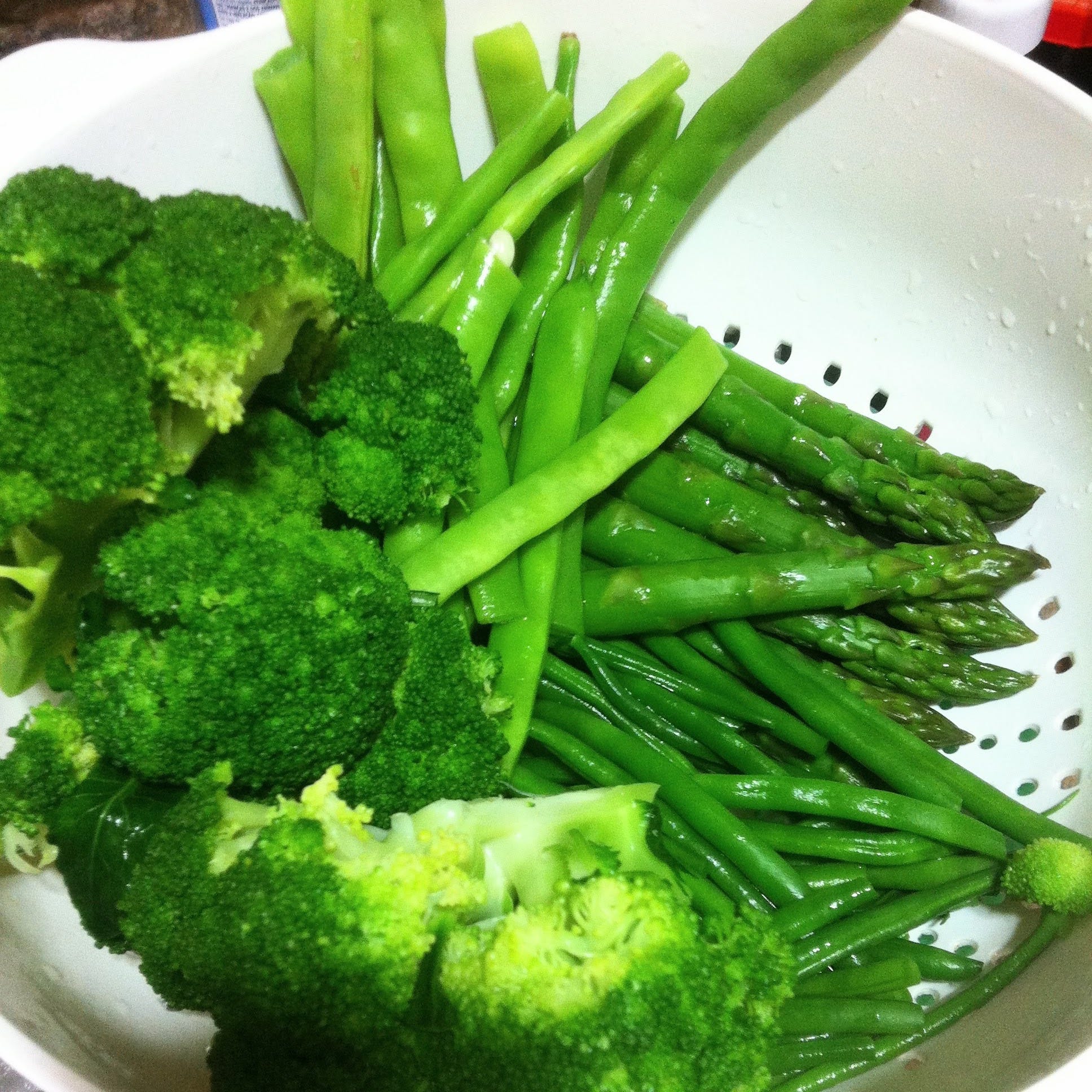
I have rarely overcooked a green bean since. Here’s how I make sure of it:
What ruined those beans wasn’t a lack of skill. It was that I wasn’t there. Everything I know about cooking a green bean is really about how to be there — how to stand at the edge between bright and gone, and stop exactly on time.
That’s what Kitchen Notes is for this one. Why a green bean is green, down to the single atom that holds the color — and what heat, acid, and a closed lid do to steal it. The heavy salt we boiled them in under Oswaldo at the Ritz, and why it only works if your timing and your ice are exact. How to buy them, store them in a towel, and read doneness by the bite instead of the clock. And the cold shock that seals the color the instant it’s right — the difference between a bean that’s alive on the plate and one that gave up in the pot.
Kitchen Notes is available to paid subscribers.
============================================================================
