

S.O.S.
A few months into my time at the Ritz, I laughed at the wrong ticket.


(Before we get to the cream sauce — and we will get there — it’s worth knowing what this dish actually was before the military got hold of it)
I had a station on the main cooking line. Fried food, hot appetizers, vegetables, garnishes. After the main dinner service ended, I stayed on alone to handle room service — pantry, cold food, hot food, all of it. One person. A lot of running.
Tickets came in through Chef Hans, the sous chef. He stood on the other side of the line, called out what needed making, and kept the flow moving. When a plate was ready he sent it out. That was the system. It worked.
One night, late, the main service was winding down. The other cooks were cleaning up, still there but moving slower, the urgency bleeding out of the room. Desserts were still going. I was covering everything else alone.
Chef Hans read me a ticket for room service.
Chipped beef on cream.
I laughed. SOS, I said. Shit on a Shingle. At the Ritz. No way.
Chef Hans read it again.
I laughed again.
He read it again. And again. I can’t remember how many times he tried before his patience ran out, only that it was more than once and probably more than twice. The veterans liked to do that — nothing mean, but the way any pressure-filled environment tests its newcomers. Misdirection. See if the rookie rattles. I’d seen it. I knew the game.
Except I didn’t.
Chef Hans turned, walked to the butcher, came back with sliced chipped beef — and a menu. He set it on the silver in front of me. There it was. Chipped Beef on Cream. On the Ritz menu. He didn’t say a word. He moved to my station and started sautéing the beef in clarified butter.
The other cooks were cleaning up around us. Most of them were laughing. Kitchens are that way.
The saucier always had cream sauce made. Chef Hans ladled it in, the sauce coming together fast and clean, then nodded at me: toast points. I made the toast points.
The room service waiter came. Picked it up. Gone.
Nobody said anything afterward. They didn’t need to.
— — —
Very rich people sometimes have very ordinary tastes. That is entirely their right.
I had walked into the Ritz with a picture in my head — silver platters, classical technique, the whole weight of French haute cuisine — and made the rookie’s mistake of thinking the picture was complete.

The Ritz knew better. The guest in that room wanted chipped beef on toast, and the Ritz was going to give it to them, executed with the same care as the Sole Meunière, served in the same weathered silver, by the same room service system that delivered everything else. The dish was not beneath the institution. My assumption was.
Part of the job is learning to serve people as they wish to be served.
Hans made me make the SOS. He worked alongside me. We plated it together. It went out.
Normally for paid subscribers only, this is a taste: the Kitchen Notes cover roux: why raw starch fails, what the fat is actually doing, the three grades and when to use them, and the difference between cream sauce and true béchamel. The technique is the point.
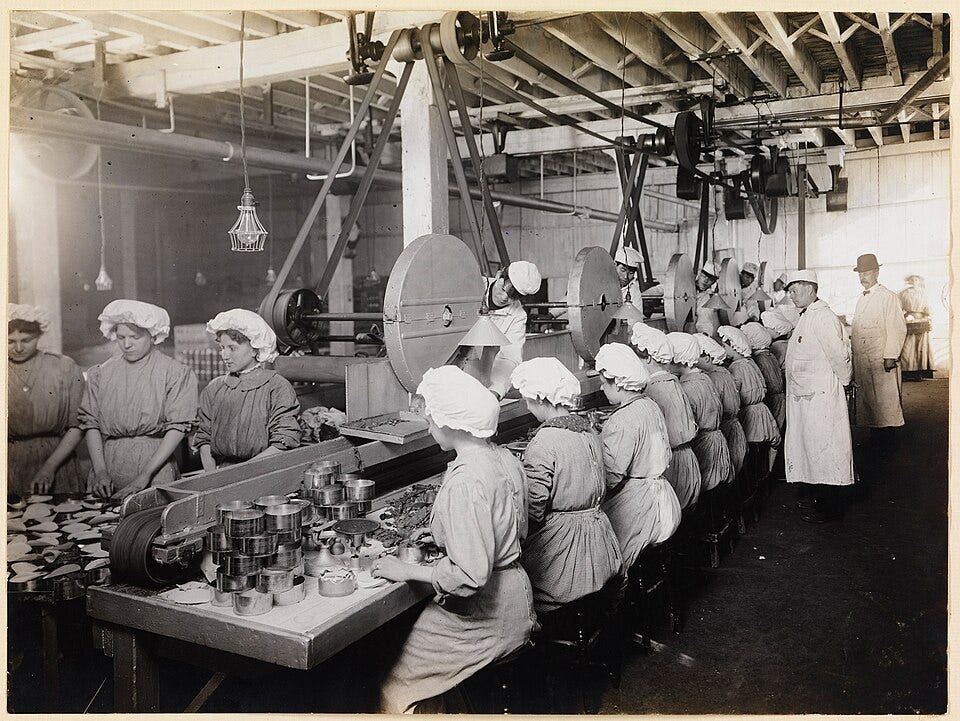
SOS — Before the Military Got Hold of It
The dish is older than the nickname.
Creamed meat on toast appears in American cookbooks through the 1800s. The basic preparation — protein in a white sauce on bread — is older than that. The French have versions. The English have versions. It’s a sensible thing to do with dried or leftover meat and a sauce that can stretch it.
The military adopted it during the First World War, scaled it to feed millions, stripped it down, and gave it a name to match the soldiers’ opinion of it. Chipped beef reconstituted in a white sauce on white bread. Cheap. Fast. Filling. It did what it needed to do.
That’s the version most people carry in their head when they hear the name.
From the Menu to the Plate
Whatever you think of the dish, if it’s on the menu you make it, and you make it correctly. That means the sauce is made correctly. Which means the roux is made correctly.
Here is how that works.
Roux and Cream Sauce Principles
Start with the problem.
Raw starch dropped directly into hot liquid does two things, neither of them good. It clumps — the outside of each granule gelatinizes instantly and forms a shell that traps the dry starch inside. And even when you fight through the lumps, raw starch has a flavor: chalky, flat, faintly pasty. You’ve tasted it. You remember it. It’s what people mean when they say a sauce “tastes floury.”
Roux solves both problems at once.
When you cook flour in fat before it ever touches liquid, you coat each starch granule in fat. Fat is hydrophobic — it resists water. So when you add liquid, the granules separate and disperse instead of clumping. And the cooking drives off the raw starch flavor. How long you cook it determines how much flavor you drive off — and what flavor you add in its place.
That’s the whole mechanism. Everything else follows from it.
The fat
Classically, roux is made with butter. In the professional kitchen, often clarified butter — butter with the milk solids removed, which lets it withstand higher heat without burning and gives you a cleaner base to work from. But the fat is not what thickens the sauce. The starch does that. The fat is flavor and vehicle, nothing more.
Which means you have latitude. At home I use olive oil almost exclusively. The roux doesn’t care. Your palate does. Use the fat that makes sense for the dish you’re building.
The grades
Roux is cooked to different depths depending on what you’re making.
White roux — cooked just long enough to lose the raw flour taste, a minute or two over medium heat. It stays pale. This is what you want for cream sauces — maximum thickening power, neutral flavor.
Blonde roux — cooked a few minutes longer until it turns the color of pale sand and smells faintly nutty. Used for velouté, some soups. Slightly less thickening power; more flavor.
Brown roux — cooked until it’s the color of peanut butter or darker, with a pronounced nutty, almost toasted flavor. The backbone of gumbo and many Cajun preparations. Much less thickening power — you need significantly more of it to do the same job. But the flavor it contributes is the point.
For the SOS, you want white roux. Clean, neutral, maximum body.
The ratio
The line I’ve always used: equal parts flour and fat by volume, with slightly more flour. It works surprisingly well.
Cook it to the wet cement stage — thick, cohesive, pulling away from the sides of the pan. Then add your liquid gradually, whisking as you go. Start with a small amount, get it smooth, then add the rest. The sauce will look thin and wrong for a moment. Keep whisking. Keep the heat moderate. As the temperature climbs the starch does its work and the sauce thickens.
If it ends up too thick, add more fat — not liquid, which thins the sauce but takes the flavor with it. If it’s too thin, you needed more roux. Unlike many mistakes in cooking, this one is usually recoverable.
The finished sauce should coat the back of a spoon and hold a clean line when you drag your finger through it. Fluid, not stiff. It should pour.
On what not to do
Some cooks shortcut the roux with a slurry of flour and cold water stirred into hot liquid — what kitchen guys call bull fuck. It thickens, technically. It also tastes like raw flour and feels like paste in the mouth. There’s no reason to do it if you have the three minutes it takes to make roux correctly.
In most kitchens, when a cook was being too fussy, the line was: what do you think, you’re cooking for the Ritz? At the Ritz, the same line ran: what do you think, you’re cooking for the Pope? Every kitchen has a ceiling it invokes. Ours was higher than most. Which meant there was no excuse, ever, for bull fuck.
On the Name
One technical note, briefly: what most cookbooks call béchamel, professional cooks call cream sauce. They are not the same thing. True béchamel — Escoffier’s béchamel — calls for half a pound of lean veal, cubed and gently fried with butter and minced onion without browning, added to the sauce and cooked slowly for a full hour before straining. A serious preparation. What you are making here is roux, milk or cream, and seasoning. Hans called it cream sauce. So do I.
The Sauce Underneath Everything
Cream sauce is not a glamorous thing to master. It is not the sauce that impresses anyone at the table. It is the sauce that makes a dozen other things possible — the base, the carrier, the thing underneath the thing.
At the Ritz we always had some made in advance, kept warm in thick crockery in a bain-marie — a hot water bath, essentially: a vessel of hot water in which you set another vessel, keeping its contents at a steady, gentle heat without direct flame. The professional kitchen’s answer to the problem of sauces that skin over, break, or scorch when left unattended. We used it constantly.
The guest in that room got what they asked for, made correctly, by someone who a few minutes earlier had laughed at the ticket.
That was the point.