

That Sinking Feeling
A Ritzy Way to Wash Dishes

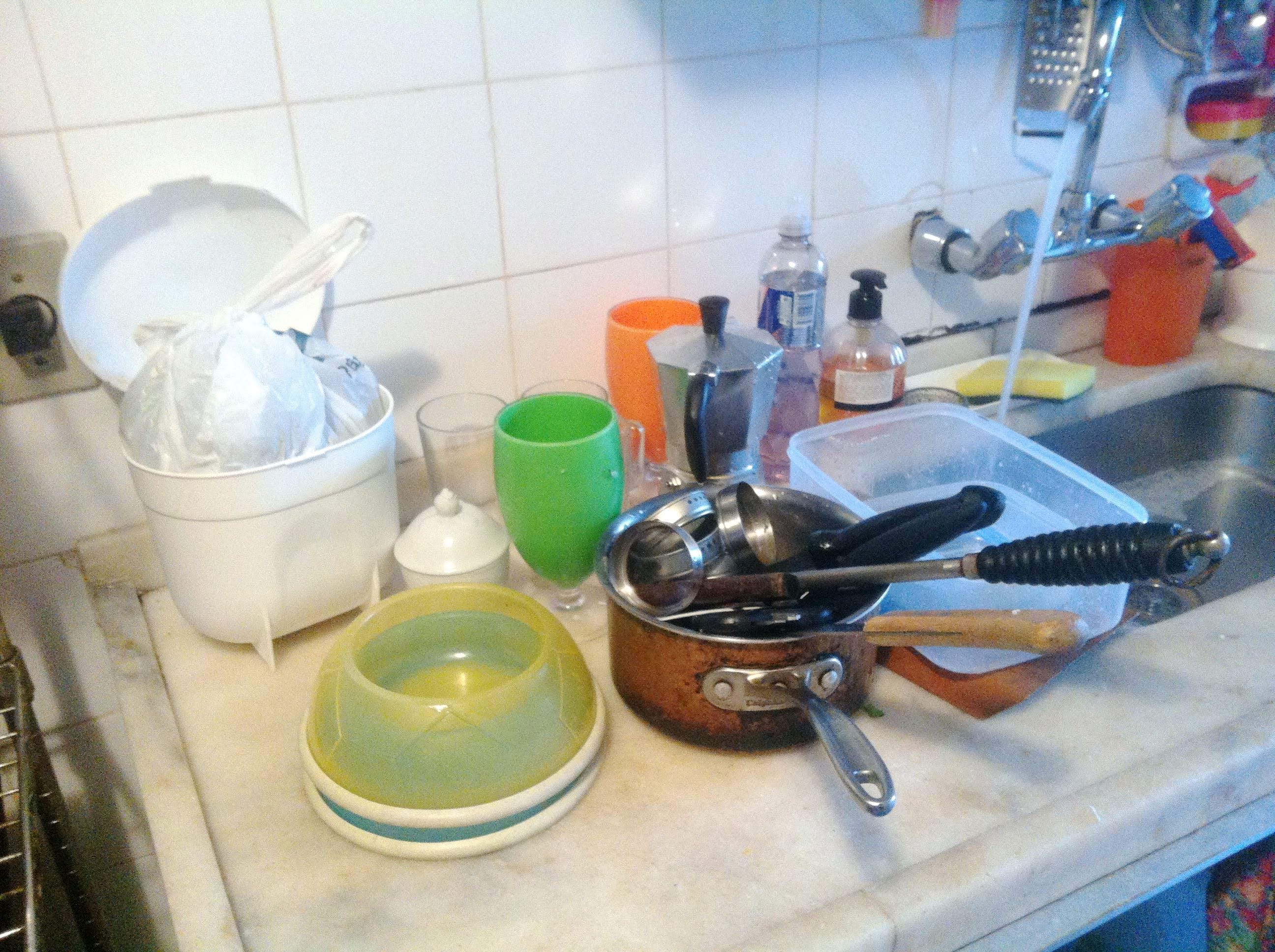
Have you ever finished cooking, looked at the sink, and had a sinking feeling?
I’ve almost never met someone who loves doing dishes. I’ve met plenty who’ll do anything to avoid them.
In my house, we had chores. My mom died when I was very young. It was natural for my sister and me to wash the dishes. Not natural to love doing them.
Dishes belong to that category of things like laundry, paying taxes, waiting in lines, and—nowadays—resetting your Wi-Fi. Not fun. You do them the best way you know how, or you leave them and it gets worse. Not really the best way to live, if you catch my drift.
My first kitchen job was washing dishes. We had a machine for plates, but pots came scorched and greasy. Nobody had a method. You just scraped, rubbed, and settled for “good enough.”
At the Ritz, I learned there was a method.
As a professional, I’m afraid to inform you: you probably don’t know how to wash dishes. Most people don’t.
Good news. It’s easier when it’s done right. A lot easier. More on that later.
When people think of The Ritz-Carlton, they picture silver trays and perfect sauces. Caviar, smoked salmon, champagne.
They don’t picture the sink.
Butterflies and stars in my eyes. The Ritz.
On my first day, with butterflies in my stomach and stars in my eyes, I was stunned when the chef pointed and said:
“The sink is yours.”
My job title was “Vegetable Cook.”
The truth: vegetable washing and peeling half the time, pan washer the other half.
Same day. Same shift. Same sink.
The sink was enormous. A standpipe in the drain let water rise to a set level, then overflow and drain. Under the sink: an agitator. You could soak and scrub pots at the same time, without touching them.
And the day started with quantities that still make me laugh. Bushels of beans. Fifty-pound bags. That sink was where everything passed through.
Wash. Cool. Reset. Again.
Then service started—and whatever illusion I had about being special, cooking at the Ritz was over.
Pans arrived from the saucier with food caked on. I was trained to scrape off any loose debris, put them in a full sink of very hot soapy water, pull on elbow-length rubber gloves, and turn on the agitator.
The agitator churned. The soak did its work.
A few minutes later, the caked-on food came off easily with a stiff natural bristle brush.
The sink—the soak and the agitator—had already done most of the work.
My loop was simple:
Scrape. Soak. Brush. Rinse. Air dry.
My two key tools were a stainless steel scraper and a natural bristle brush.
We used the same sink for cooling vegetables. Cold water running, constantly draining down the standpipe. It was the best way to cool vegetables I have ever seen—fast, clean, and in volume.
When the morning prep was done, the super sink transformed into the pot sink.
For pots, you took out the standpipe, plugged the sink, filled it with hot water and soap, and set up the soak—until the water wasn’t hot anymore, or the suds died.
My forearms got weathered in those rubber gloves, but my hands weren’t destroyed.
The first rule was clean as you go. The whole staff enforced it. The Ritz had strong esprit de corps. You were part of a team and expected to carry your weight. If you didn’t do it right, the team members would be all over you.
I have rarely worked in a kitchen with fewer egos.
And from my sink station I could watch Chef Oswaldo work.
That was special.
He was a genius. If you don’t believe me, ask him.
He called me Charlie—Charlie Chaplin. He called himself The Master.
He’d place the food on silver trays and hand them across the counter to the waiters with a grand flourish:
“Voila!”
Silver trays out front. Sink work in back.
Both had to be just right.
Fernand Point wrote that success is the sum of small things done correctly. At the Ritz, I learned he meant everything—even the sink.
Not just truffles. The right amount of detergent. The right water temperature. The right amount of time soaking and agitating.
Kitchen Notes: Practical guide: wash dishes without wasting soap, water, or effort
The goal
Reset the kitchen. Not perfect. Not heroic. Just reset.
The anti-method (what most people do)
Cold water. Running water. Soap on sponge. Scrub harder. The sponge gets greasy. The pan barely changes. The sink fills up.
Stop.
The chant
Scrape. Soak. Brush. Rinse. Dry. Say it once. Then do it.
The two rules (the ones that change everything)
Rule 1: Soap goes in the water. Not on the sponge. Soap-on-sponge disappears. Soap-in-water works.
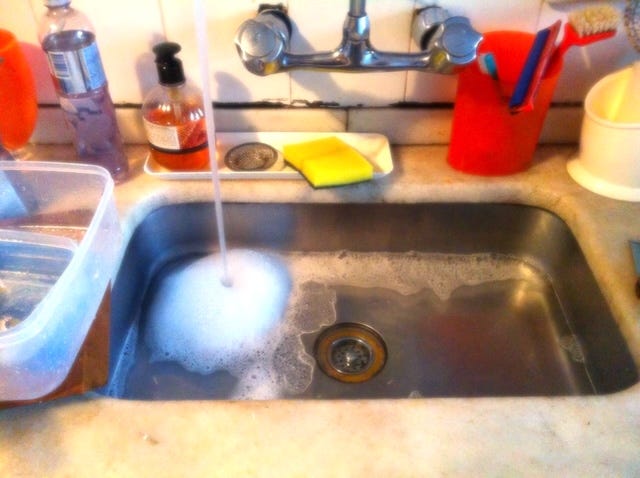
Rule 2: Stop the stream. Running water is for rinsing only. Fill the sink for washing.
The method (one pass, no drama)
Scrape Trash/compost first. Don’t make the sink do that job.
Soak Fill the sink. Hot as you can stand with gloves. Drop the worst things in first. Give them five minutes. Let time work.
The Brush does the work. Scraper finishes the stuck spots. (Brush → scrape → brush again.)
Rinse Quick rinse at the end.
Dry Air-dry if you can. Towels re-dirty “clean” dishes.
When to dump the wash water
Dump it when it lies:
| not hot | no suds | greasy |
Dead water makes you work twice.
Tonight, don’t “do dishes.” Reset the kitchen.
Scrape. Soak. Brush. Rinse. Dry.
Appendix: If you insist on a sponge (two safe cleanup options)
After each use: rinse hard, squeeze dry, let it dry completely.
Option A — Microwave (fast, but do it safely):
• Wet it completely. Dry sponges can catch fire. • No metal. No scrub pads with metallic fibers. • Microwave ~1 minute, then let it cool.
Option B — Dishwasher (easy): Run it through a hot cycle (heated dry/sanitize if you have it).
If it still smells weird or feels slimy: replace it.
OK, I’ve been skipping the soaking part. I do collect wash water to water my garden, so I’d have an extra step recovering that soak water. I also hate sponges and have found a scrubby pad made of walnut shells that can be composted when it starts to disintegrate. I do most of the dishwashing as I have no dishwasher and my husband, while being a great cook, is terrible at washing dishes. Thanks Danny!